
It means being fit enough to sprint, slide and jump at full effort all game and still play with good technique and good decisions when tired.
Basketball runs in bursts. A sprint in transition, a closeout, a box out, then a whistle, a free throw or a dead ball, then the next burst. Good conditioning matches that pattern: short, all-out efforts of 60 seconds or less with real rest between them.

One model rests about three times as long as the work early in the year, then tightens the rest to about twice the work as fitness builds. The aim is that fatigue arrives later and technique holds longer.
Coaches build it three ways: timed runs like suicides and 17s, conditioning built inside skill drills, and scored full-court games that make players run without calling it running. Many programs test fitness with a couple of set runs and rerun them on a schedule.
The common mistake is long, slow jogging. It does not train the bursts the game asks for. Young players get plenty of conditioning from games and active drills. High school and college players need a plan over the year, with a build-up, a peak and a back-off, so legs are fresh when the games matter.
More Practice questions
Free playbook
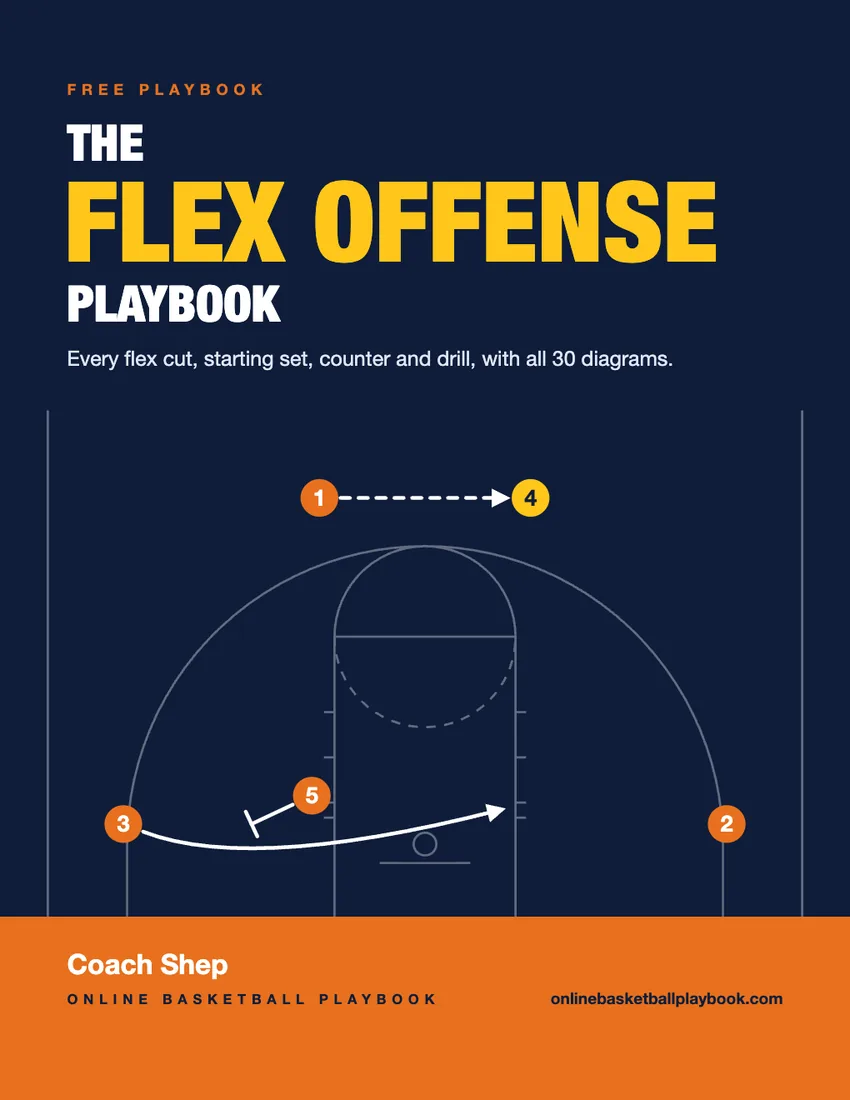
Get the free flex offense playbook
Every flex cut, starting set, counter, special and drill, with all 30 diagrams, in one printable PDF.