
Five seconds to release the throw-in at most levels. Check your state association or league rulebook for the exact count.
The count starts when the official hands the ball to the inbounder or places it at his disposal. The inbounder has to release the pass before the count reaches five.
The inbounder also has limits. He cannot step onto the court before he releases the ball, hand the ball to a teammate instead of passing it, or throw it so it goes out of bounds without being touched. Any of those turns the ball over.
Here is the coaching point. Many teams waste sideline and baseline possessions by lobbing the ball to the nearest player. Organized teams use that five-second window to run a play. Teach your inbounder to slap the ball to start the action, read the defense and know where the safety is.
The common mistake is panicking at four. Teach a call, like the safety's name, that means get it to him now. On defense, the same rule is an opportunity. A denial rotation that takes away the first option can force a five-second call or a desperation pass. Young players should practice counting it out loud. Older players learn to use the whole count without fear.
More Special Situations questions
Free playbook
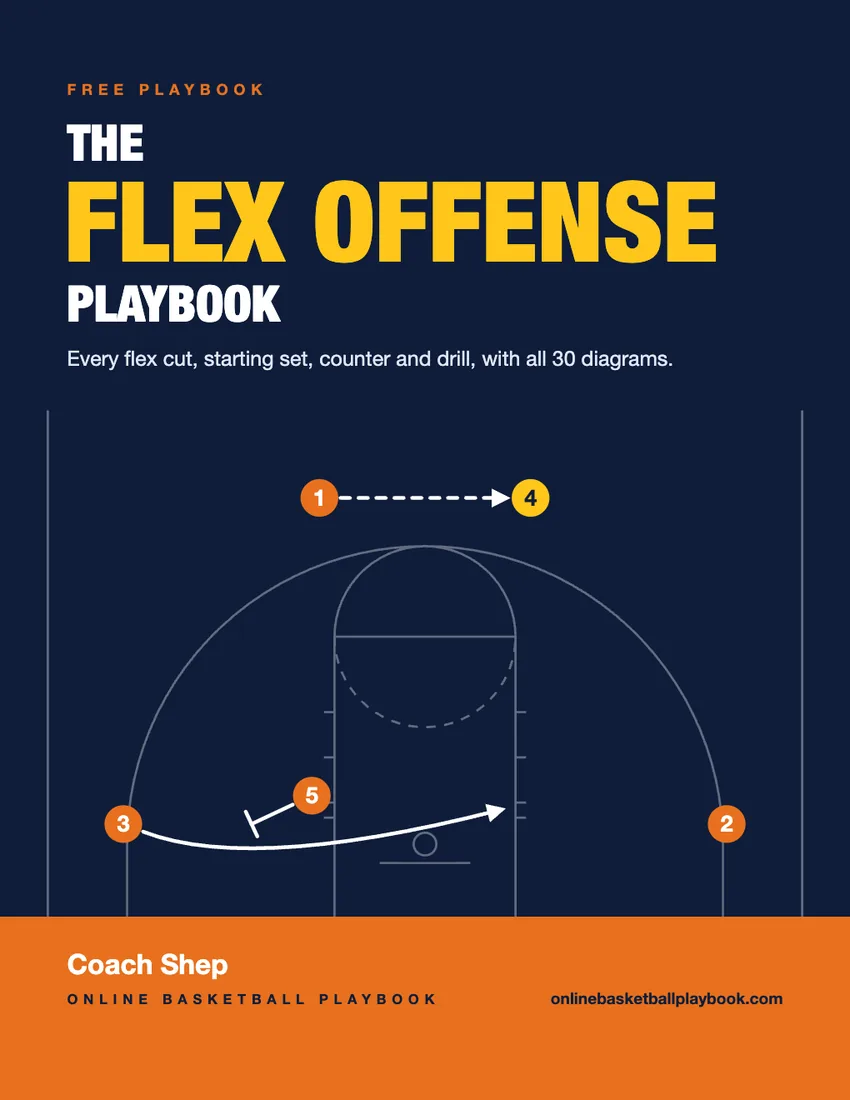
Get the free flex offense playbook
Every flex cut, starting set, counter, special and drill, with all 30 diagrams, in one printable PDF.