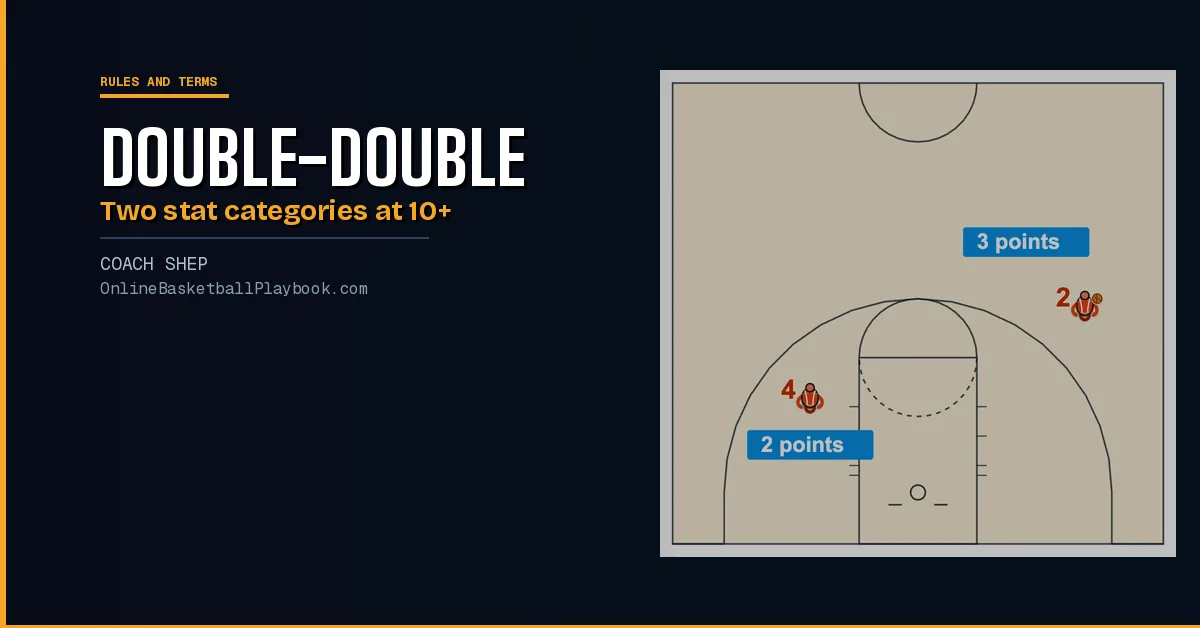
What is a double-double in basketball? It is a single-game box score where one player records 10 or more in two of the five main counting stats: points, rebounds, assists, steals and blocks. The label is media and fan shorthand. Officials do not stop the game to award it. Any league that keeps a full stat sheet can note one after the final horn.
What Counts Toward a Double-Double
Pick any two of these five standard lines on a box score. Each one you count must reach 10 or more in the same game:
- Points: made field goals and free throws combined.
- Rebounds: offensive and defensive boards added together.
- Assists: passes that lead directly to a made basket.
- Steals: taking the ball from an opponent.
- Blocks: deflecting an opponent's shot on its upward path.
Definitions for each abbreviation live in the stats section of basketball terms and in basketball statistics guide. For how points and fouls interact with the clock, start with basketball rules.

Common Double-Double Pairs
Most double-doubles you see on TV are points plus rebounds or points plus assists. That pattern follows roles, not a rule. A rim-running forward can stack points and rebounds. A primary ball handler often lands points and assists on the same night.
- Points and rebounds: common for posts and forwards who play inside and on the glass.
- Points and assists: common for guards who both score and create for teammates.
A double-double built on steals or blocks is rare, because 10 of either in one NBA game almost never happens.


Double-Double vs Triple-Double
A triple-double adds a third category at 10+. Same five boxes, stricter bar. Double-doubles happen far more often because two strong categories are enough. Coaches should treat both labels as descriptions of a stat line, not goals that override team play.
For example, 18 points and 11 rebounds is a double-double. Add 10 assists in the same game and the line becomes a triple-double. There is no partial credit for 9 in a category.
For advanced rate stats built from the same box score, see effective field goal percentage and basketball statistics guide.
How Often It Shows Up by Level
NBA and NCAA games have official scorers. High school and youth games may track fewer stats, so check what your scorer keeps before you talk about a double-double.
Do not compare a middle schooler's line to a pro double-double. Minutes, pace and who keeps the stats all differ. Use the term to teach what each column means, not to rank kids on social media.
To decide what to track, see basketball stat sheet, and agree before the game who counts rebounds and who counts assists.
Teaching Youth Players the Stat Sheet
Introduce the five categories one at a time in practice, then let players find them on a completed box score after a scrimmage. Ask which two columns hit 10+ for a volunteer example before you name "double-double" out loud.
- Rotate one parent or assistant as scorer so categories stay consistent.
- Define an assist the same way all season: pass before the shot, no extra dribble that breaks the direct link.
- Praise effort that shows up in rebounds and deflections even when points stay below 10.
- Never encourage chasing empty numbers in a blowout.
Pair stat literacy with basketball terminology drills so board, dime and steal mean the same thing on the court and on paper.
Questions Coaches Ask About Double-Doubles
What is a double-double in basketball?
It is 10 or more in two of points, rebounds, assists, steals and blocks in the same game.
Is a double-double an official award?
No. It is a box-score label. Officials do not record it during play.
Can you have a double-double with only 9 points?
Yes, if two other categories reach 10. Nine points, 12 rebounds and 10 assists is a double-double. Nine points, 12 rebounds and 5 assists is not.
What is the difference between a double-double and a triple-double?
A triple-double requires 10+ in three categories. See what is a triple-double for examples.
Should youth coaches track double-doubles?
Only if you keep a full stat sheet and use the numbers to teach roles, not to compare players in public.
Get the next coaching guide in your inbox
One email when a new guide or diagram set goes up. Free.
Want the printable playbook packs?
Playbook packs: zone attack, press break, press defense, out of bounds, quick hitters, practice plans and the youth turnover cure, each a printable PDF. Or draw your own version free in PlayDraw.
See the playbook packsBack to Basketball Rules and Regulations and every Rules and Terms page.
Keep Building
Related breakdowns
What Is a Triple-Double in Basketball?
What is a triple-double? Double figures in three of points, rebounds, assists, steals and blocks in one game, with examples and youth stat-sheet tracking.
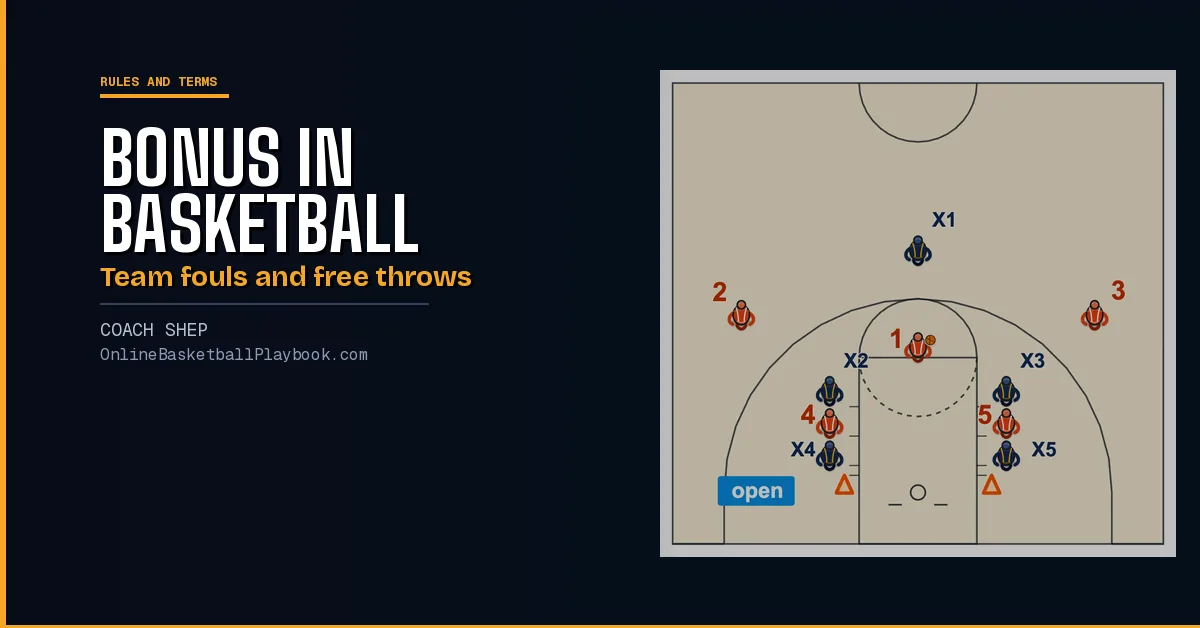
What Does Bonus Mean in Basketball?
What does bonus mean in basketball? Team fouls that send the other team to the line, with bonus and double bonus thresholds by NFHS, NCAA, NBA and FIBA.
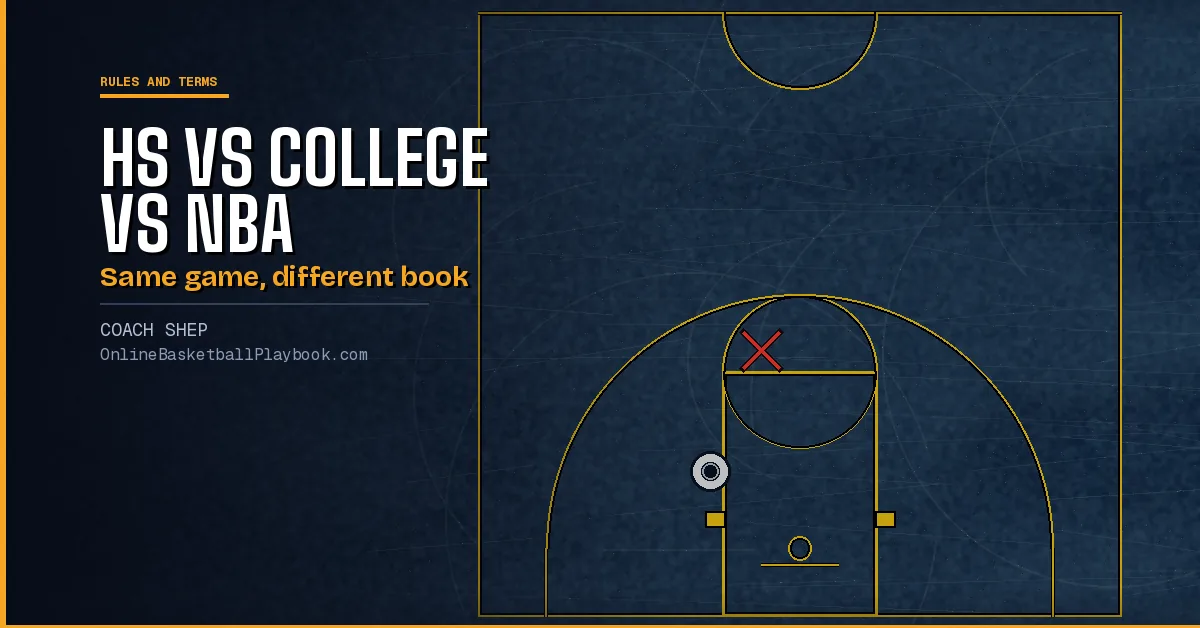
High School vs College vs NBA Rules: What Changes for a Coach
High school vs college vs NBA rules: shot clock, three-point line, bonus, fouling out, timeouts, backcourt count and defensive three seconds, and what each changes.