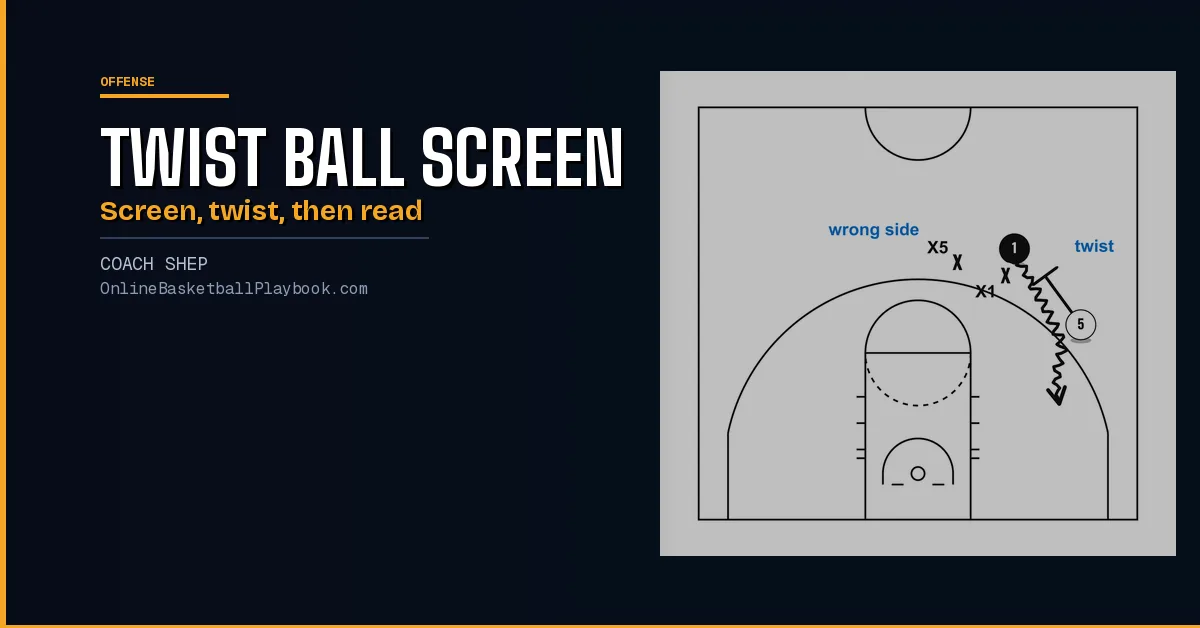
A twist ball screen is a ball screen that gets flipped. The screener sets it on one side of the ball handler's defender, then sets it again on the other side, and the handler crosses back the way he came. The flip can come from one player who turns and re-screens, or from several players who take part in the action. The point is to catch two defenders who just played the first screen and are now standing on the wrong side of the second one.
The twist beats a hard hedge and a defender who goes under, a second big can set the flipped screen, and two horns sets end in a twist. The wider pick and roll, with its rules and coverages, is on the pick and roll.
What a Twist Ball Screen Is
In a twist, the screen is turned to face the other direction after the first one is played. The handler who came off the first screen toward the middle now comes back toward the sideline off the second one, or the other way around.
There is more than one way to do it:
- Single-player twist. The same screener flips his screen to the other side of the defender.
- Multiple-player twist. Other players are part of the action. A different big can set the flipped screen while the first screener rolls.
A twist is a second screen, so it sits beside the other second-screen ideas on pick and roll reads, where the re-screen appears as a handler and screener read, and on screener reads. The basic screen itself, footwork and angle, is on setting screens in basketball. Rep the first screen until it is automatic, then add the flip.
The Twist Against a Hard Hedge
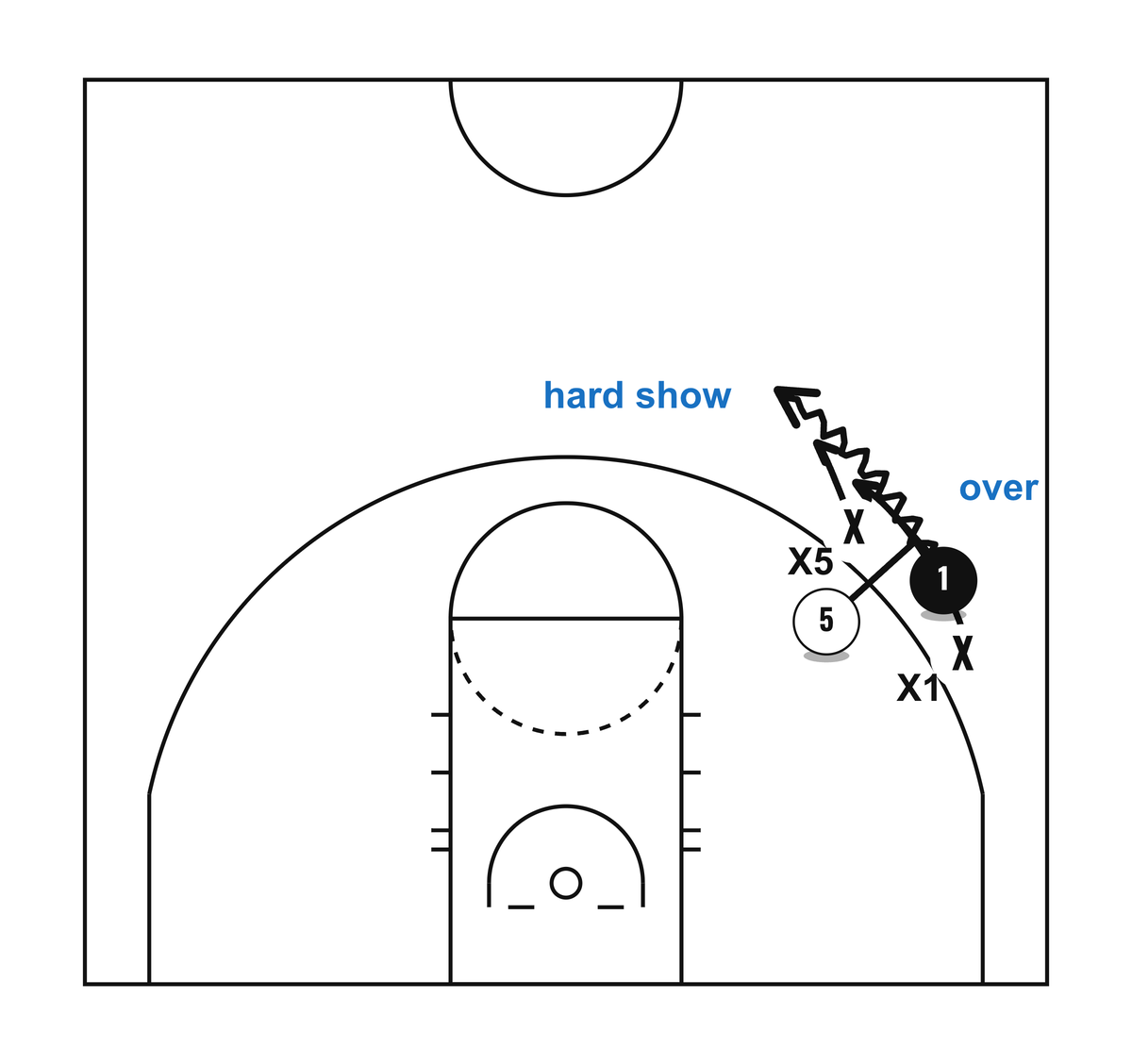
1 holds the ball on the left wing, and 5 sets the screen on the middle side of 1's defender. 1 comes off it toward the middle. X5, guarding the screener, shows hard on the ball. X1 battles over the screen and stays with the ball.

Now 5 flips the screen to the other side of X1, and 1 goes back the way he came. Look at where the two defenders are:
- X1 has fought over the first screen and squared up the ball, and the new screen is on his other side.
- X5 has just finished his hard show. He is out on the middle side of the floor and in no position to show again on the second screen.
Both defenders are on the wrong side of the ball screen. The full menu of coverage answers, including the hedge-and-recover the twist is attacking, is on hedge in basketball and how to defend the pick and roll.
The Multiple-Player Twist
The flip does not have to come from the first screener. In the multiple-player version a second big sets the twist, and the defender who helped on the first roll cannot get back to show on the second screen.

3 has the ball in the left slot. 5 comes over and screens for him at the top of the key, 3 dribbles toward the right side and 5 rolls to the rim. X5 shows on the ball and X3 goes over. 4 is on the left side, and his defender, X4, drops in to help on 5's roll.

In this case 4 sets the twist. He comes up and screens on the other side of X3, and 3 dribbles back toward the left. X4 cannot show on this second screen. He was down helping on 5's roll. X5 recovers to the rolling 5.
Other ways a screener can finish are on the pick and pop, and another action with two bigs screening in turn is the double drag screen. Rep both screens with both bigs.
The Twist Against Under Coverage

The twist also works when the on-ball defender goes under the screen. The setup is the same left wing screen. 1 dribbles toward the middle, and this time X1 ducks under the screen rather than going over it. How a defender plays under, and when a staff chooses it, is on how to go under a ball screen.

Now 5 flips the screen and re-screens. Against a defender who went under, 5 can take a better angle on the second screen. That angle puts X1 in a bind:
- Go over the top of the ball screen this time.
- Or go under again and risk going extremely far under.
The same idea, a screener who re-screens when the defender ducks under, is listed by coverage on ball screen continuity offense. Rep the re-screen until the screener finds that angle every time.
Horns Twist: Roll and Replace
Horns puts both bigs high, one on each side above the elbows, 2 and 3 in the corners, and the point guard bringing it up to the top of the key. Two twist sets start from that look. The plain horns alignment and its other actions are on horns sets.

4 screens for 1 out of horns, then rolls to the rim. 1 dribbles off it toward the left slot. 5 stays high on the right side, and 2 and 3 hold the corners.

Then 5 sets the second ball screen, a roll and replace screen, on the other side of 1's defender. 1 dribbles back toward the right and 5 rolls. 4, who rolled on the first screen, replaces up from the left block to the high spot. Here the flip comes from the second big. One rolls and the other comes up to fill the spot he left.
Horns Twist Off a Hand-Off
The second horns twist set gets the ball to a big first and uses a dribble hand-off before the flip. The hand-off itself, with its footwork and reads, is on the dribble hand-off.

1 passes to 5 high on the right side and cuts to the left wing. 3 comes up out of the left corner to the left slot, using a screen from 4.

5 dribbles at 3 and hands off to him at the top of the key. 3 heads toward the right slot. On the left side, 4 lifts out and 1 drops to the corner.

Then 5, who handed off, flips his screen to the other side of 3's defender. 3 dribbles back to the middle while 5 rolls to the rim. 2 lifts out of the right corner to the right wing. Drill the hand-off and the flip as one action.
Other Sets That End in a Twist
Other sets reach the twist from different entries:
- A dribble hand-off into the twist. A big hands off to a guard going one way, then the other big ball screens to send him back the other way.
- Zipper cuts and a weave into the twist. Both bigs screen for the wings, who come up from the blocks, then 1 dribbles over and passes to 2, and 2 dribbles at 3 for a hand-off before the ball screen. The zipper cut is on zipper cut basketball.
A shorter take on the twist, and the late flip disguise, are on the pick and roll. Pick one entry and keep the flip the same at the end of it.
Questions Coaches Ask
What is a twist ball screen in basketball?
A ball screen that gets turned around and set again facing the other way. The screener sets it on one side of the ball handler's defender, then sets it again on the other side, and the handler goes back the way he came.
Why does the twist work against a hard hedge?
Once the big has shown hard and the guard's defender has fought over the first screen, both defenders are on the wrong side of the flipped screen. The guard's defender is squared up to the ball for the first direction, and the big has just finished his hard show and is in no position to show again.
Can you run a twist against a defender who goes under?
Yes. When the on-ball defender goes under, the screener can set the second screen at a better angle. The defender must then either fight over the top or duck very far under.
Does the same player have to set both screens?
No. One player can flip his own screen, or several players can be involved. In one version a second big sets the twist while his defender is still helping on the first big's roll.
What is horns twist?
A twist run from the horns look. In one version 4 sets the first ball screen and rolls to the rim, 5 sets a roll and replace screen, and 4 replaces up. Another version starts with a pass to a big and a dribble hand-off before the flip.
Every diagram on this page uses the symbols on how to read a basketball play diagram. Full ball screen offenses are on the spread pick and roll offense and under basketball offense.
Get the next coaching guide in your inbox
One email when a new guide or diagram set goes up. Free.
Want the printable playbook packs?
Playbook packs: zone attack, press break, press defense, out of bounds, quick hitters, practice plans and the youth turnover cure, each a printable PDF. Or draw your own version free in PlayDraw.
See the playbook packsBack to Pick and Roll and every Offense page.
Keep Building
Related breakdowns
Cross Screen Basketball: Set, Use and Defend the Lane Cross
Cross screen basketball for posts and wings: set on a wing pass, cutter reads, screen-the-screener follow-ups and man-to-man defending rules.
Basketball Screens: Every Type of Screen and How to Read It
Basketball screens by type: on-ball, down, flare, back, pin down, cross, stagger, elevator, screen the screener and hand-off, with each read and counter.
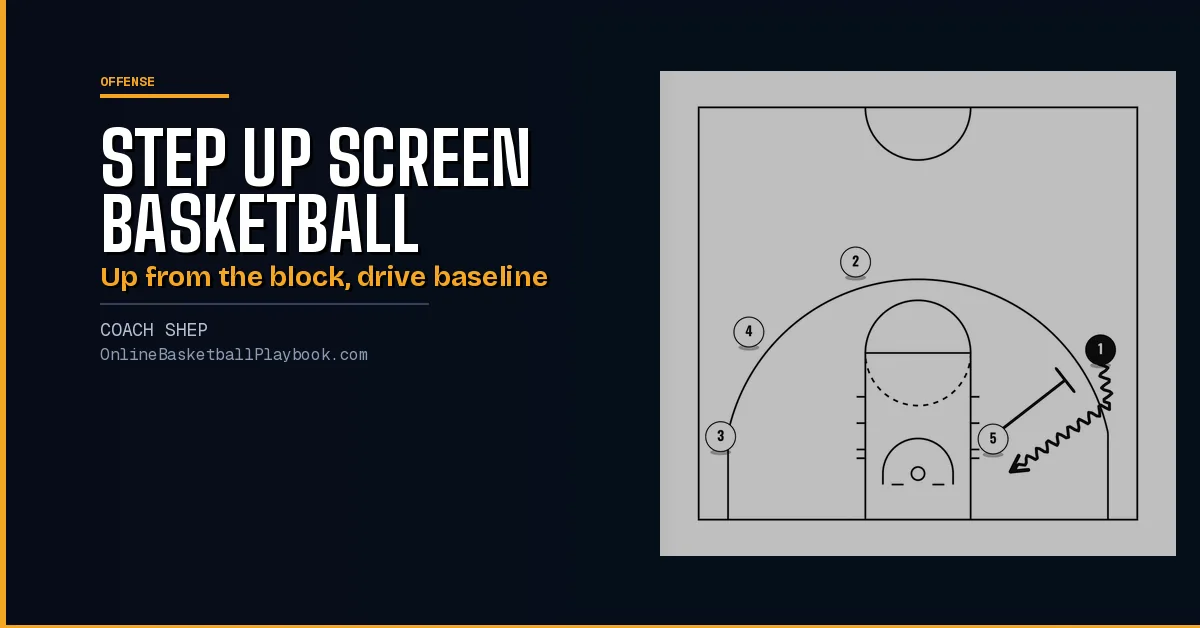
Step Up Screen Basketball: The Step-Up Ball Screen Explained
Step up screen basketball explained: the ball screen that sends the handler baseline, the answer to ice, the screener's options, the weak side and drills.